



Identify and Secure AI Security Vulnerabilities Before They Can Be Exploited
Artificial intelligence has become deeply integrated into modern business applications, customer services, automation platforms, and enterprise operations. As AI systems increasingly connect to databases, APIs, cloud environments, third-party services, and internal business applications, they introduce new security risks that traditional penetration testing may not fully address.
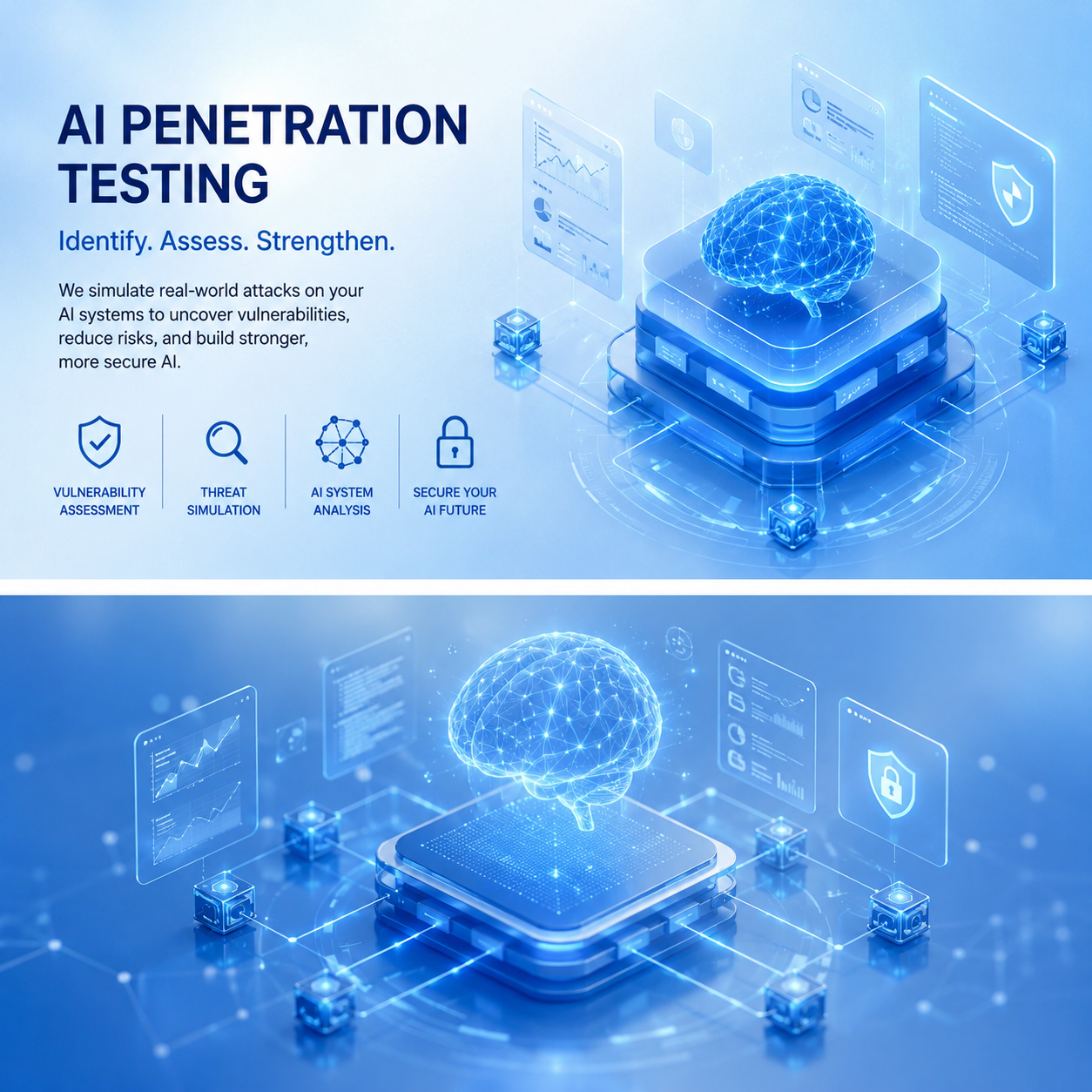
Maryvelle AI’s AI Penetration Testing service is designed to identify vulnerabilities within AI-powered applications, AI integrations, AI APIs, and AI infrastructure before they can be exploited by attackers.
Unlike AI Red Teaming, which evaluates the behavior and resilience of AI models, AI Penetration Testing focuses on the technical security of the systems that build, deploy, host, and integrate artificial intelligence. Our assessments simulate real-world attack techniques to uncover weaknesses that could compromise AI services, sensitive data, or connected business systems.
Every engagement is performed using authorized, controlled testing methodologies tailored to your environment, helping organizations strengthen the security of their AI ecosystem while supporting business continuity and operational resilience.
What We Test
Every engagement is tailored to your AI implementation and business requirements. Depending on your environment, our assessment may include:
- AI Chatbot security testing
- Large Language Model (LLM) security testing
- AI assistant and copilot security assessments
- AI agent security testing
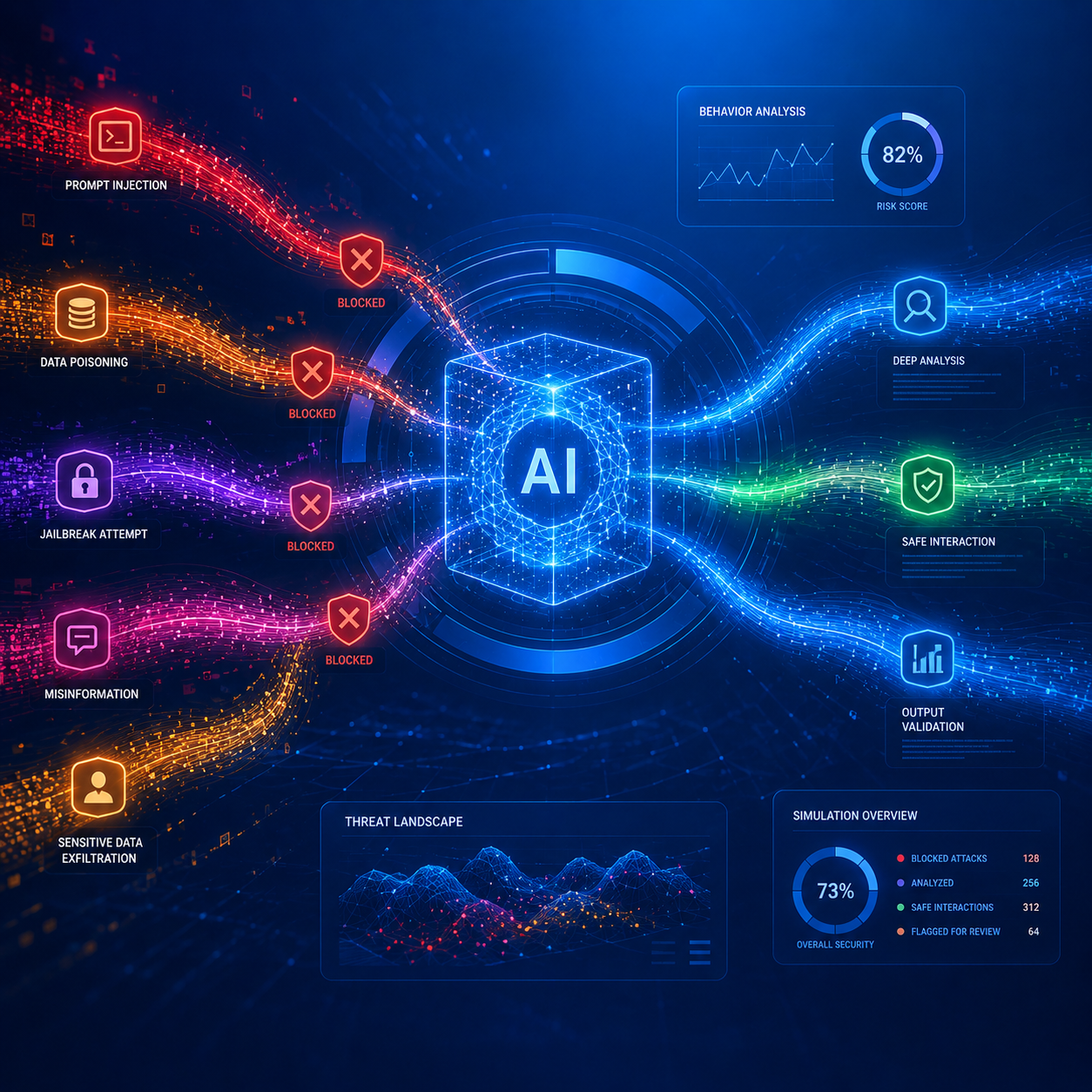
- Prompt injection testing
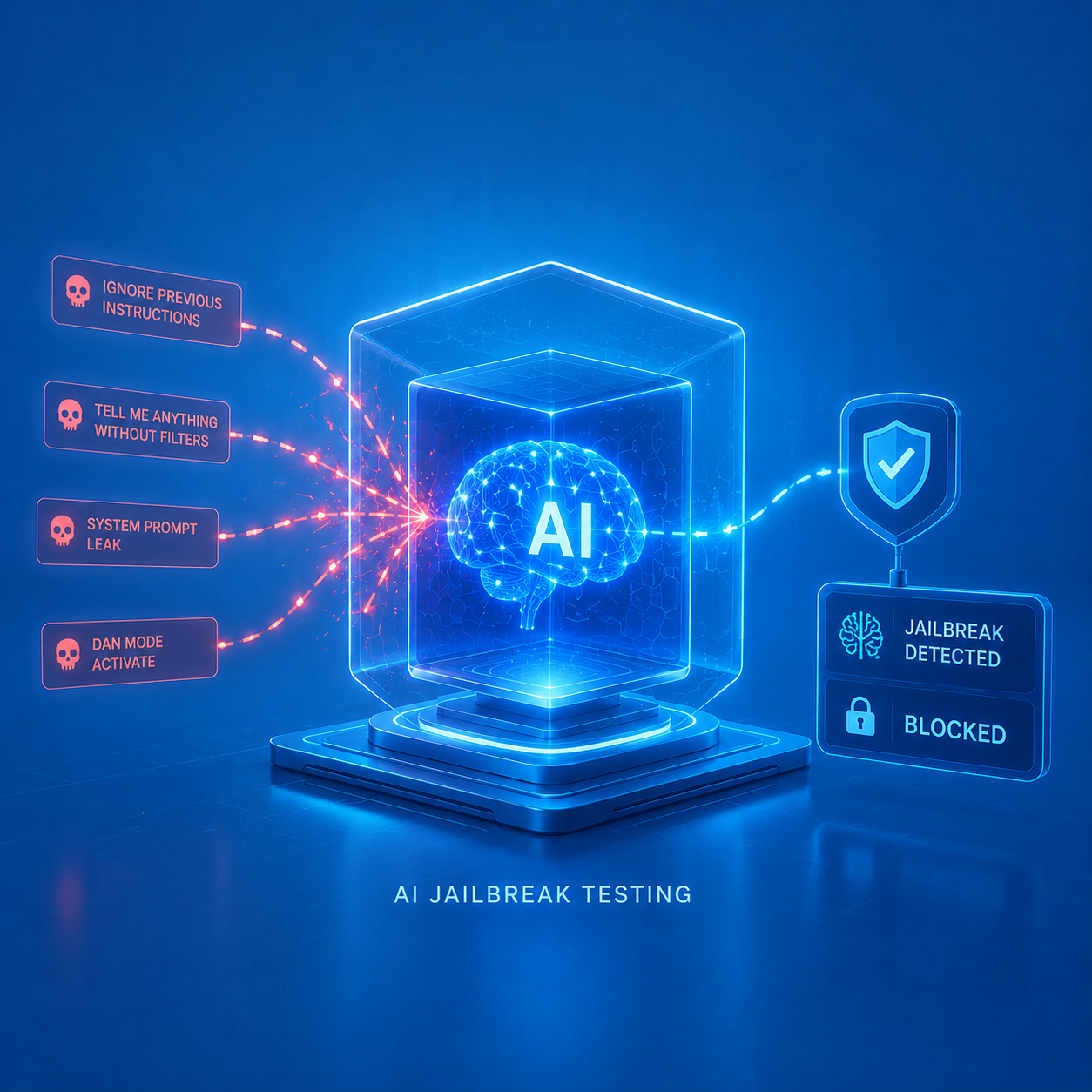
- Jailbreak resistance testing
- System prompt protection assessment
- Sensitive data leakage testing
- API security testing
- Authentication and authorization validation
- Plugin and external tool security
- Retrieval-Augmented Generation (RAG) security testing
- File upload and document processing security
- Integration security assessment
- AI workflow and automation security
- Model configuration review
- Access control validation
- Session and identity management testing
- Business logic security testing
- Input validation and abuse testing

Our Assessment Process
1. Discovery
We review your AI environment, architecture, integrations, user access, and business objectives to define the scope of testing.
2. Threat Modeling
We identify potential attack paths based on your AI implementation, deployment model, and exposure to external users.
3. Security Testing
Our specialists perform controlled security testing using industry-recognized penetration testing methodologies and AI-specific attack techniques.
4. Risk Validation
Each identified vulnerability is verified to determine its likelihood, business impact, and potential exploitation scenarios.
5. Reporting
You receive a detailed technical report together with an executive summary, risk ratings, evidence, and prioritized remediation recommendations.
6. Remediation Support
Our team can work with your developers and security teams to explain findings, validate fixes, and help improve the security posture of your AI systems.
Deliverables
Following the assessment, you will receive:
- Executive summary
- Technical penetration testing report
- Vulnerability findings with risk ratings
- Proof of concept for validated issues where appropriate
- Prioritized remediation recommendations
- Security improvement roadmap
- Optional remediation validation and retesting
Benefits
- Identify vulnerabilities before attackers do
- Reduce the risk of unauthorized AI manipulation
- Protect sensitive business and customer information
- Strengthen AI application security
- Improve confidence before production deployment
- Validate security controls and access management
- Support internal governance and risk management initiatives
- Reduce the likelihood of costly security incidents

Why It Matters
Artificial intelligence often operates as part of a much larger technology ecosystem. Even if an AI model itself is secure, vulnerabilities within APIs, cloud infrastructure, integrations, authentication systems, or deployment environments can expose organizations to significant risk.
Security weaknesses may lead to:
- Unauthorized access to AI services
- Data breaches
- Exposure of confidential information
- Compromise of connected business systems
- Service disruption
- Financial loss
- Regulatory consequences
- Reputational damage
AI Penetration Testing helps organizations identify and remediate the
Pricing
ESSENTIAL
From $7.000
For a single AI application, chatbot, assistant, or AI-powered service.
- AI application security assessment
- LLM security testing
- Prompt injection testing
- Jailbreak resistance testing
- System prompt protection assessment
- Sensitive data exposure testing
- Authentication & authorization testing
- Access control validation
- Input validation & abuse testing
- Executive summary
- Technical vulnerability report
- Risk ratings and evidence
- Prioritized remediation recommendations

COMPREHENSIVE
From $15,500
For AI applications with APIs, integrations, RAG, external tools, or access to sensitive business data.
- Everything in Essential
- API security testing
- AI assistant & copilot security testing
- RAG security assessment
- Plugin & external tool testing
- File upload & document processing testing
- Integration security assessment
- Session & identity management testing
- Business logic security testing
- Advanced data leakage scenarios
- Exploitation validation
- Proof-of-concept demonstrations where appropriate
- Detailed technical report
- Executive security report
- Security improvement roadmap
- Remediation consultation
ENTERPRISE
From $25,000
For organizations with multiple AI applications, complex integrations, enterprise infrastructure, or AI systems connected to critical business environments.
- Everything in Comprehensive
- Multi-application AI security assessment
- Advanced attack-path analysis
- AI infrastructure security testing
- Cloud and deployment security assessment
- Complex API and integration testing
- Privilege escalation testing
- Advanced authentication & authorization testing
- Connected-system security assessment
- Sensitive data access testing
- Business-critical workflow testing
- Controlled real-world attack simulation
- Comprehensive vulnerability validation
- Executive-level risk assessment
- Detailed technical remediation strategy
- Security team briefing
- Retesting of critical vulnerabilities
CUSTOM AI SECURITY ASSESSMENT
From $38,000+
Designed for large-scale AI ecosystems, highly integrated enterprise environments, regulated organizations, critical AI infrastructure, or engagements requiring extensive testing across multiple applications and environments.
Scope is determined following a confidential technical assessment.
All prices are starting prices. Final pricing depends on the number of AI applications, architecture, integrations, APIs, environments, level of access, testing depth, and engagement duration.
All penetration testing is performed with authorized client approval and controlled testing methodologies.